









Hajj Financial Transparency
How much pilgrims pay, how much BPKH covers, and where the funds come from.
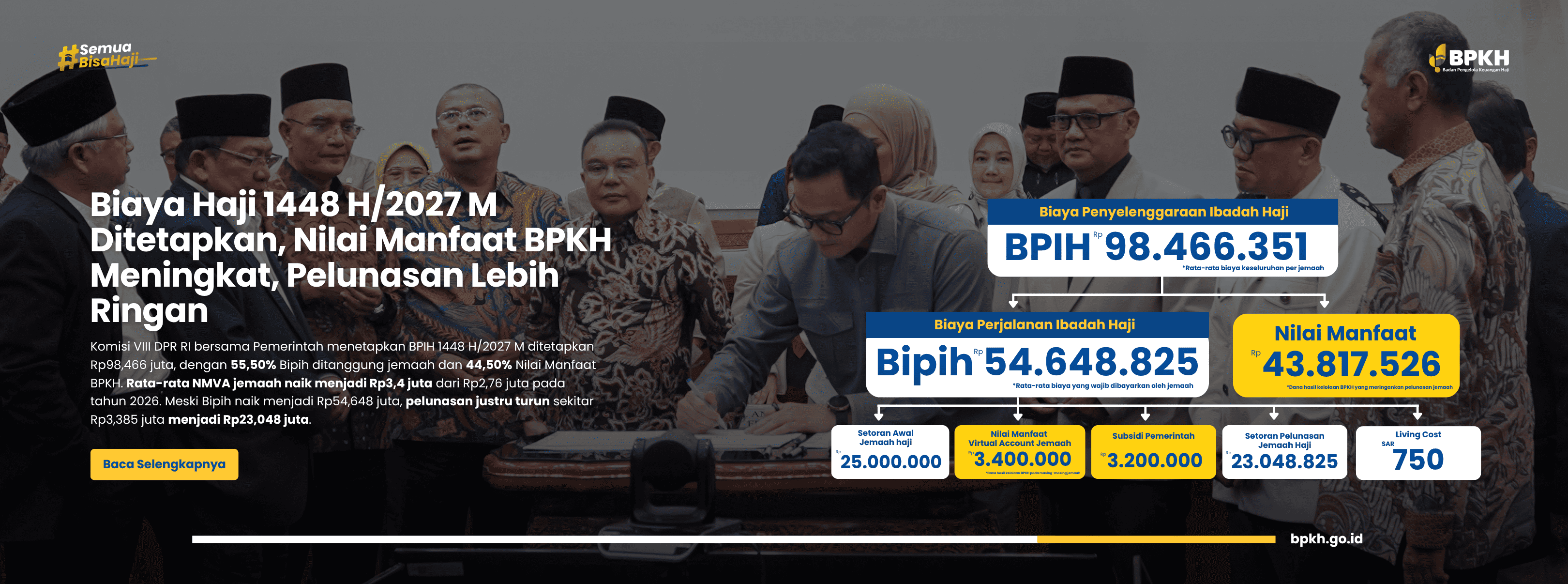
out of the total Hajj cost of Rp 98,47 million per pilgrim. The remaining Rp 54,65 million is paid by the pilgrim.
Total BPIH 2027 is Rp 98,47 million per pilgrim, up 12,65% (Rp 11,06 million) from 2026.
The average final payment (pelunasan) for 2027 is Rp 23,05 million per pilgrim.
Total Benefit Value allocated to BPIH 2027: Rp 8,83 trillion.
News & Articles
Hadiri ISEF 2026, BPKH Perkuat Kolaborasi Ekonomi dan Keuangan Syariah
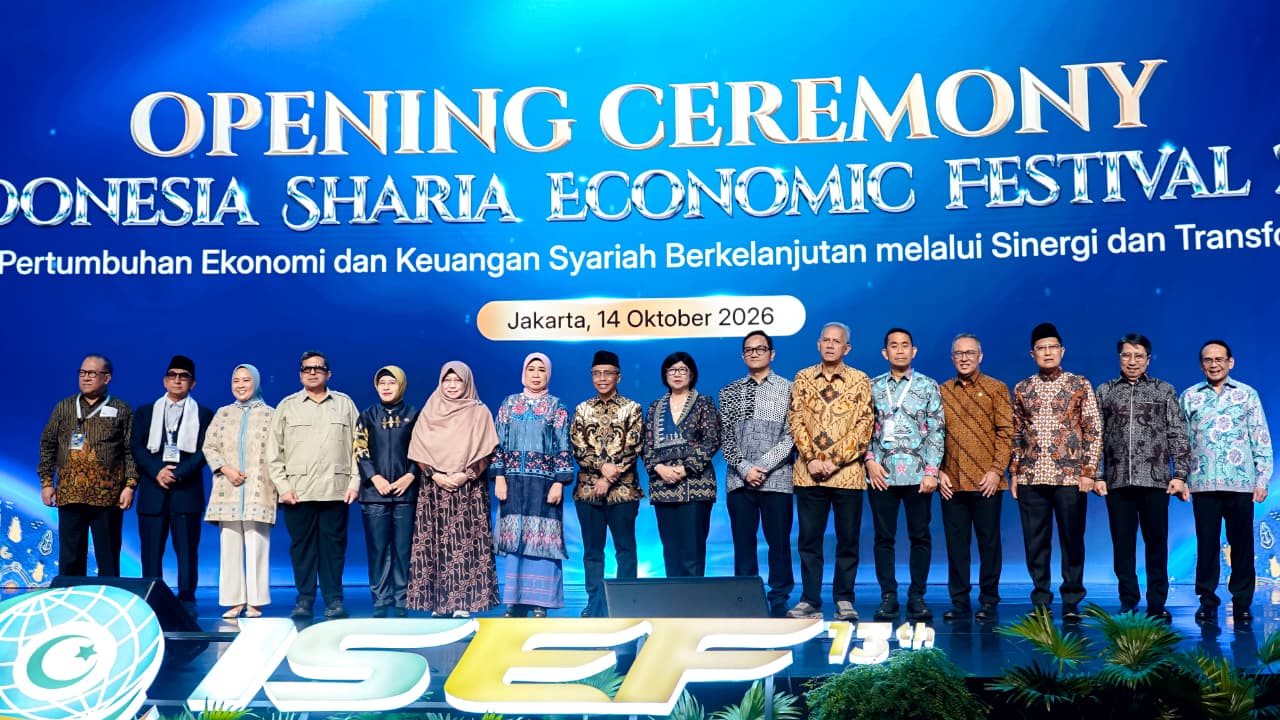
Jakarta, 14 Oktober 2026 – Badan Pengelola Keuangan Haji (BPKH) menegaskan komitmennya untuk memperkuat kolaborasi dalam pengembangan ekonomi dan keuangan syariah nasional melalui partisipasi dalam pembukaan Indonesia Sharia Economic Festival (ISEF) 2026 di Jakarta International Convention Center (JICC), Jakarta.Partisipasi BPKH dalam ajang tersebut menjadi bagian dari upaya memperluas sinergi dengan pemerintah, regulator, industri keuangan, dan pelaku usaha untuk mendorong ekosistem ekonomi...
Read More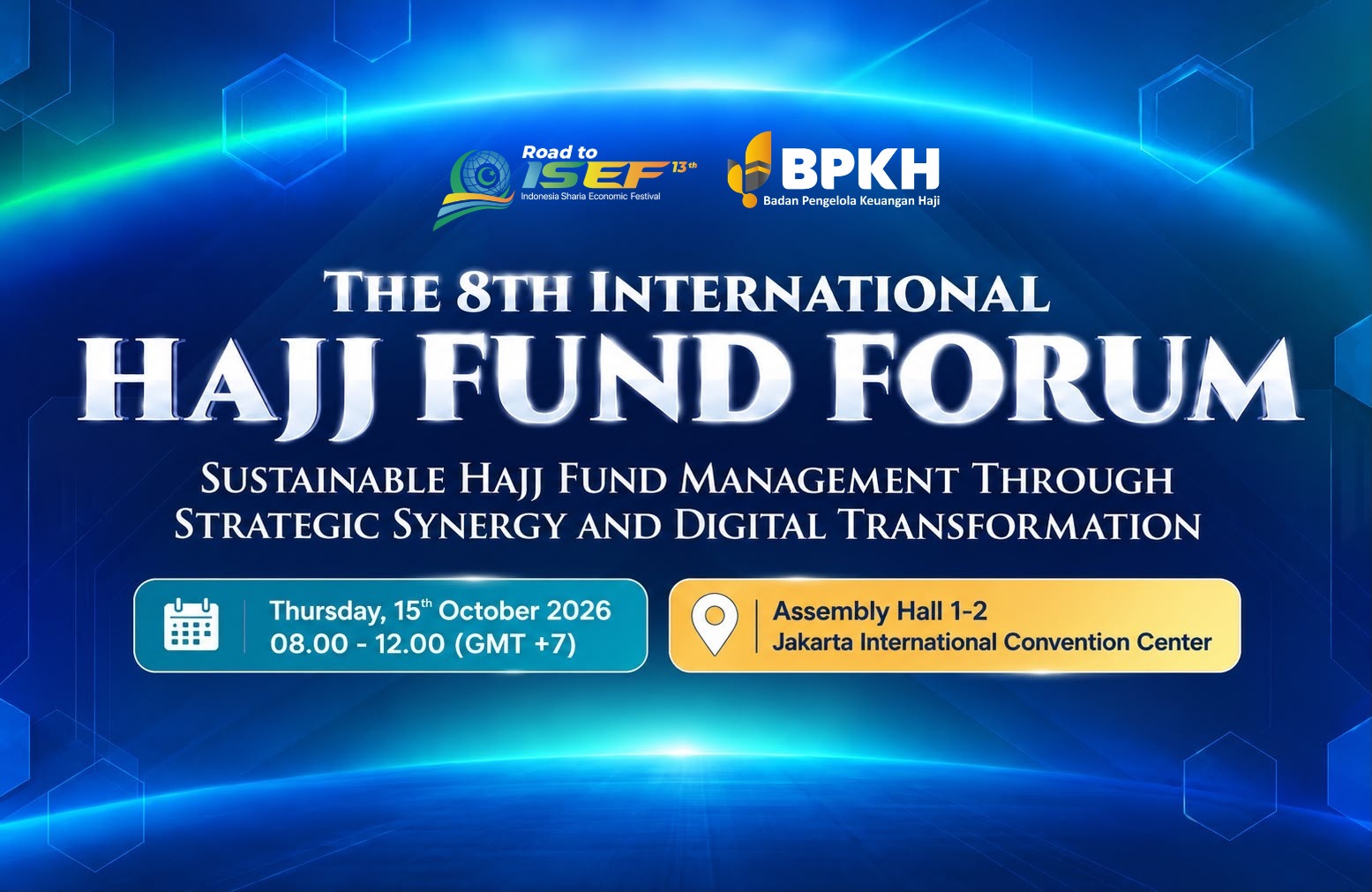
BPKH Gelar International Hajj Fund Forum ke-8, Dorong Kolaborasi Global untuk Keberlanjutan Dana Haji
Jakarta, 13 Oktober 2026 — Pengelolaan dana haji tidak hanya berkaitan dengan pembiayaan penyelenggaraan ibadah haji, tetapi juga menyangkut keberlanjutan manfaat bagi jutaan jemaah saat ini dan generasi mendatang....
Read More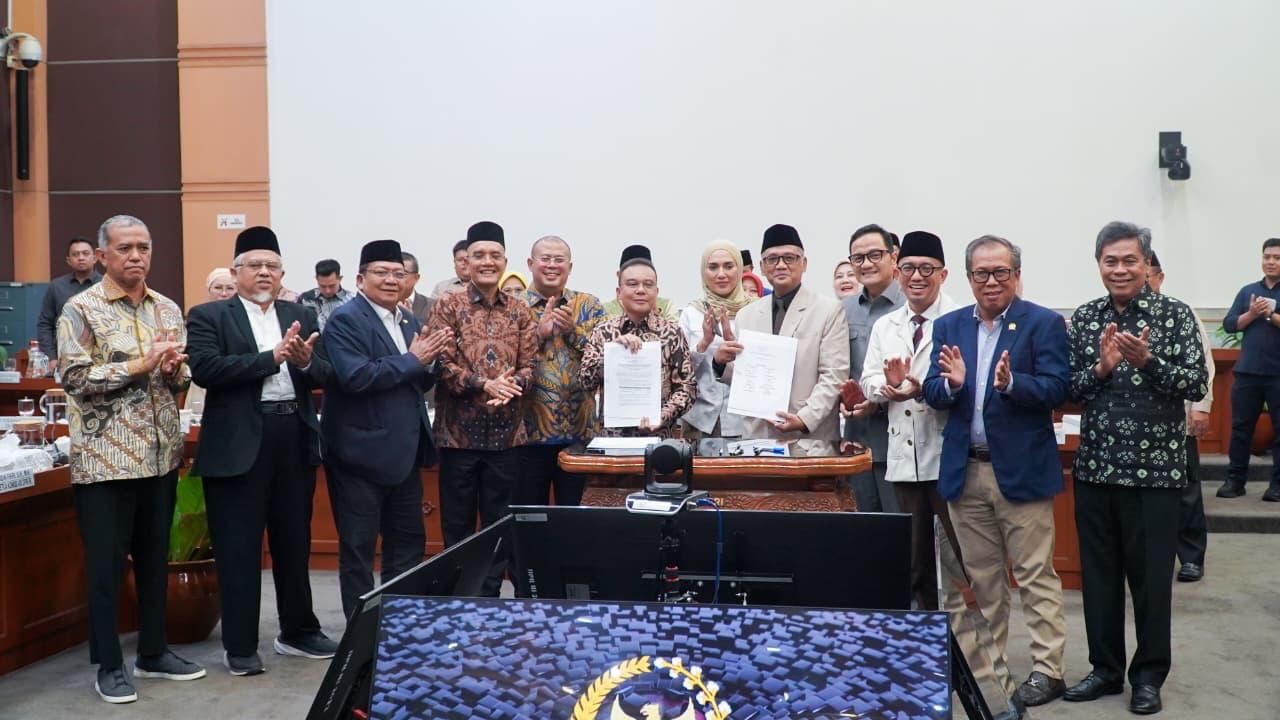
BPIH 2027 Ditetapkan Rata-rata Rp98,47 Juta per Jemaah, 44,50 Persen Bersumber dari Nilai Manfaat
Jakarta, 7 Oktober 2026 – DPR RI bersama Kementerian Haji dan Umrah resmi menetapkan Biaya Penyelenggaraan Ibadah Haji (BPIH) tahun 1448 Hijriah/2027 Masehi sebesar rata-rata Rp98.466.351 per jemaah.Keputusan tersebut disampaikan Wakil Ketua DPR RI Sufmi Dasco Ahmad saat membacakan kesimpulan dan kesepakatan rapat Panitia Kerja (Panja) Komisi VIII DPR RI dan Pemerintah di Gedung Parlemen, Senayan, Jakarta, Rabu (7/10/2026).“Panja Komisi VIII DPR RI dan Pemerintah mengenai BPIH sepakat bahwa...
Read MoreExchange Rates
| Currency | Bank Buy |
|---|---|
|
USD
United States Dollar
|
Rp. 17.907,82
0,06%
|
|
SAR
Saudi Arabian Riyal
|
Rp. 4.775,20
0,08%
|
Rates as of 15 Oktober 2026, 08:00 WIB
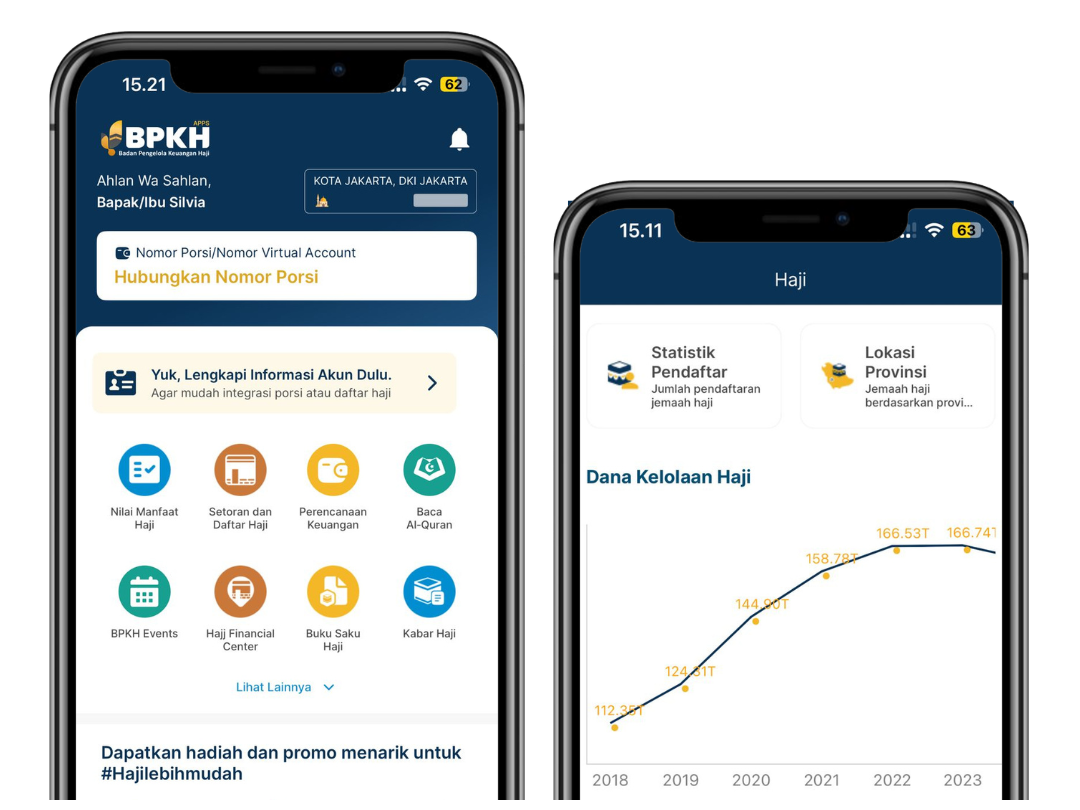
Check Your Hajj Funds Easily
Download the BPKH App Now


Publications & Reports

E-Magazine
BPKH digital magazine presents informative content on management, investment, and hajj pilgrim services.
View Details
Financial Reports
Transparency in hajj financial management through comprehensive audited reports
View Details
Articles & Research
In-depth analysis on economic conditions and hajj fund investment strategies
View DetailsFrequently Asked Questions
Is it true that BPKH's financial reports have never been audited?
That is not true. Like other state institutions established by law, BPKH is also routinely audited by the Audit Board of the Republic of Indonesia (BPK RI). Each year, BPKH releases financial reports for two semesters. For 7 consecutive times, BPKH has received an Unqualified Opinion (WTP) from BPK RI.
What are the roles and differences between BPKH and the Ministry of Hajj and Umrah in organizing Hajj?
- BPKH is tasked with managing Hajj Finances including receipts, development, expenditures, and accountability of Hajj Finances. The management returns in the form of Benefit Value are used for Hajj implementation and partially distributed to waiting pilgrims.
- The Ministry of Hajj and Umrah represents the Government as a regulator proposing various policies for Hajj implementation each year. Besides being a regulator, the Ministry also serves as a Hajj operator, determining accommodation, catering, flights, and annual Hajj costs with Parliament approval.
What Funds Are Managed by BPKH?
1. Initial Hajj Deposit Fund
The Initial Hajj Deposit Fund is the IDR 25 million entrusted by prospective pilgrims to BPKH when registering for Hajj, through a wakalah contract, to be managed and optimized. Because of the long waiting period, this fund is managed safely and in accordance with Sharia principles so that it is not eroded by inflation until the time of departure. The proceeds of its management are used to help rationalize the cost of Hajj.
2. Ummah Endowment Fund (DAU)
The Ummah Endowment Fund (Dana Abadi Umat) is a fund for community welfare programs, not for individual Hajj departures. DAU comes from the efficiencies of Hajj operations in previous years, with the principal value kept intact while only the benefit value (yield) is utilized. As mandated by law, its benefits are distributed across Indonesia through education and dakwah, social-religious, Hajj services, health, worship facilities, community empowerment, and disaster response programs.
What is the Ummah Endowment Fund (Dana Abadi Umat)?
The Ummah Endowment Fund is a BPKH program to manage and develop funds from Hajj financial management which are then utilized for the benefit of the Muslim community.
Objectives of the Ummah Endowment Fund:
- Improving the welfare of Muslims in Indonesia
- Building religious infrastructure
- Providing educational scholarships
- Community economic empowerment programs
- Health assistance for underprivileged communities
Sustainability Programs include:
- Construction of mosques and Islamic boarding schools
- Scholarships for students
- Micro business capital assistance
- Free health programs
- Clean water facility construction
Are the Hajj Funds Safe?
Safe, because it is in accordance with Law 34/2014 Article 46 (3)
- Sharia compliance: BPKH only transacts in accordance with Sharia and with Sharia Financial Institutions
- Investment security in Sharia financial instruments with minimum A rating
- Prudence with a low-moderate risk profile
- Optimal return on Benefit Value sufficient for BPIH needs and Hajj waiting list allocations
- BPKH liquidity with minimum 2x Hajj season liquid funds provision
- Article 46 (2) Hajj Finance as referred to in paragraph (1) may be placed and/or invested. (3) In making placements and/or investments as referred to in paragraph (2), it must comply with Sharia principles and consider aspects of security, prudence, benefit value, and liquidity.
How Does BPKH Manage and Develop Hajj Funds?
BPKH manages Hajj funds with principles of prudence, transparency, and accountability to provide optimal benefits for Hajj pilgrims and the Muslim community.
Investment Instruments Used:
- Money Market: Sharia banking deposits, Bank Indonesia Sharia Certificates
- Sukuk: Government Sharia Securities (SBSN)
- Sharia Stocks: Investment in Sharia-compliant companies
- Gold: Precious metals as a hedge
- Property: Investment in Sharia property
Management Principles:
- In accordance with Islamic Sharia principles
- Portfolio diversification to minimize risk
- Maintained liquidity for Hajj operational needs
- Financial reports audited by independent auditors
- Information transparency to the public
How much Hajj funds does BPKH manage?
Hajj funds are managed professionally in safe and liquid Sharia instruments, audited by BPK and reported to the Parliament and President. The Hajj fund balance managed by BPKH per year:
- 2019: IDR 124.3 T
- 2020: IDR 144.9 T
- 2021: IDR 158.8 T
- 2022: IDR 166.5 T
- 2023: IDR 166.7 T
- 2024: IDR 176.3 T
- 2025: IDR 180.7 T
Is BPKH's Hajj fund investment halal or does it contain riba?
Hajj fund management is conducted in accordance with Sharia principles and supervised by the Sharia Supervisory Board.
Hajj funds are placed in Sharia investment instruments, such as:
- Sukuk (Government Sharia Securities)
- Sharia deposits
- Direct investments compliant with Sharia principles
All are managed with principles of prudence: safe, transparent, and providing benefits to pilgrims.
What is the benefit value (Nilai Manfaat) and what are the advantages?
- 1. Benefit Value (NM) is the return value from the management/optimization of Hajj finances conducted by BPKH.
- 2. The management/optimization of Hajj finances by BPKH is in the form of Sharia-compliant investments and placements in accordance with applicable laws and regulations.
- 3. Prospective Hajj pilgrims can check the benefit value received through their Virtual Account (VA) by accessing the BPKH VA application.
- 4. The distribution of Benefit Value through Virtual Account benefits pilgrims as it can be used to pay the difference or reduce the settlement costs.
- 5. As a simulation example: Mrs. Susi, a prospective pilgrim scheduled for departure in 2025, has received a Benefit Value distribution of IDR 5 million through her Virtual Account. She then received a departure invitation that year with a settlement value of IDR 25 million. Therefore, the settlement cost that Mrs. Susi must pay is IDR 20 million (IDR 25 million minus IDR 5 million Benefit Value in the Virtual Account).
Who receives the benefit value? Special Hajj pilgrims or regular Hajj pilgrims?
The benefit value is given to both regular and special Hajj pilgrims. The benefit value is distributed to the pilgrim's virtual account. The NMVA received by each prospective pilgrim can rationalize costs when departing and reduce the Hajj costs. To check the managed funds and benefit value, pilgrims can view through the BPKH VA application on Playstore/Appstore iOS.
I registered for Hajj back in 2014, why is the benefit value I receive still small?
The benefit value began to be managed and distributed more evenly after BPKH was established in 2017. Since 2018, the benefit value distribution system has been equalized to be fairer for all pilgrims.
This means the benefit value received by pilgrims is calculated from when BPKH's management began in 2017, so the waiting period before that year did not yet use the current distribution mechanism.
How much benefit value does a Hajj pilgrim receive from BPKH?
The benefit value is not given as direct cash, but is used to support Hajj financing.
Such as:
- easing the BPIH cost
- assisting Bipih settlement
- adding to the virtual account balances of pilgrims still on the waiting list
Additional:
The benefit value continues to be managed and distributed cumulatively. As an illustration, Hajj pilgrims in the waiting period have received Virtual Account Benefit Value (NMVA) which continues to grow over time.
Is BPKH's benefit value the same as the living cost / pocket money in Makkah?
They are not the same.
The benefit value is the result of BPKH's Hajj fund management, used to support Hajj financing as a whole.
Meanwhile, living cost (pocket money) is included in Bipih, the cost paid by pilgrims, and is returned to pilgrims in Saudi riyals for their needs while in the Holy Land.
How do I claim the benefit value from BPKH?
The benefit value is not claimed directly by pilgrims.
The benefit value is the pilgrim's right that is managed and distributed by BPKH through various Hajj financing and benefit schemes.
To ensure transparency, pilgrims can monitor their balance and benefit value periodically through the BPKH Apps.
Can the queue number of a deceased Hajj pilgrim be inherited?
The queue number of a deceased Hajj pilgrim can be inherited to heirs "without queuing from the beginning." Regarding the procedure for transferring the queue number, please contact the nearest district/city Ministry of Hajj and Umrah office.
Can the money deposited for Hajj registration be withdrawn?
The deposited money can be withdrawn or returned if the Hajj pilgrim applies for Hajj cancellation. The cancellation application can be done at the local district/city Ministry of Hajj and Umrah office. If the pilgrim cancels, they will lose their rights as a queuing prospective pilgrim, and if they register again, they must start the queue from the beginning.
Estimated Hajj cancellation process timeline?
The Hajj cancellation process goes through three stages:
- Regional Ministry of Hajj and Umrah
- Central Ministry of Hajj and Umrah
- Hajj Financial Management Agency (BPKH)
Each stage has different time estimates. BPKH issues a Payment Order (SPM) no later than 5 working days after receiving the complete application. However, the BPKH SPM processing at the bank requires a maximum of 5 working days (Monday-Friday, excluding national holidays).
What is the Hajj registration process? Can I register through BPKH?
BPKH is a public legal entity established in 2017 based on Law No. 34 of 2014 regarding Hajj financial management. Prospective Hajj pilgrims who wish to register can open a Hajj savings account and make an initial deposit at a Sharia Deposit Receiving Bank (BPS). Once the initial deposit is met, Hajj registration is done at the local Ministry of Hajj and Umrah office according to the ID card domicile, bringing documents from the bank and other required documents.
Why Does the Hajj Travel Cost (Bipih) Differ for Each Embarkation Point?
The Hajj travel cost (Bipih) paid by prospective pilgrims varies for each embarkation/departure area. This is due to differences in travel distance and costs in each region.
Is there an age restriction for Hajj pilgrimage in 1447 H / 2026 AD?
There is no age restriction. Hajj pilgrims above 65 years old will still be able to depart this year.
What is the Indonesian Hajj quota for 1448 H/2027 AD? And who determines it?
Indonesia's Hajj quota for 1448 H/2027 AD is 221,000 pilgrims, with the following breakdown:
- Regular Hajj Quota (92%) = 203,320 (201,585 pilgrims plus 1,735 Regional Hajj Officers and KBIHU guides)
- Special Hajj Quota (8%) = 17,680
Each country's Hajj quota is determined by the Organisation of Islamic Cooperation (OIC). The split between the regular and special Hajj quotas follows Article 10B and Article 64 paragraph (2) of Law Number 14 of 2025 and is agreed upon by Commission VIII of the DPR RI and the Government. The regular Hajj quota is then allocated to each province based on the proportion of its pilgrim waiting list.
What components are covered by Bipih and Benefit Value?
In the Working Meeting on 7 October 2026, Commission VIII of the House of Representatives (DPR RI) and the Government agreed on the average regular Hajj cost for 1448 H / 2027 AD as follows:
BPIH (Hajj Implementation Cost): is the overall operational cost of Hajj per pilgrim. For departure year 1448 H / 2027 AD, BPIH is set at an average of IDR 98,466,351, consisting of the flight cost component of IDR 38,505,046, the Saudi Arabia cost component of IDR 54,317,360, and the domestic cost component of IDR 5,643,945.
Bipih (Hajj Travel Cost) or Cost Paid by Pilgrims. The cost that pilgrims must pay averages IDR 54,648,825 or 55.50% of total BPIH, and it is used for:
- Flight costs
- Part of the syarikah service costs in Saudi Arabia under the fullboard (non-separated) scheme
- Living cost of SAR 750, returned to pilgrims in Saudi riyals
Bipih is paid through the initial deposit of IDR 25,000,000, the benefit value balance in the pilgrim's virtual account averaging IDR 3,400,000, a Government subsidy of IDR 3,200,000, and the pilgrim settlement payment averaging IDR 23,048,825. This average settlement is IDR 3,384,982 lower than in 1447 H / 2026 AD.
Benefit Value from BPKH. The cost difference is covered using the benefit value from BPKH's Hajj fund management averaging IDR 43,817,526 per pilgrim, which is 44.50% of total BPIH. The total benefit value used for the 1448 H / 2027 AD BPIH amounts to IDR 8.83 trillion.
What causes the increase in Hajj costs?
Hajj costs change every year and are caused by several factors including:
- The actual costs consist of several components that increase both domestically and internationally. These components include accommodation, consumption, services, flight costs, etc.
- Foreign exchange rate changes, where foreign currencies are used to pay for Hajj operations, as well as policies from the Kingdom of Saudi Arabia.
 BPKH TV
Company Profile BPKH
Learn about BPKH's journey, governance, and commitment to managing Indonesia's Hajj funds.